I don’t really do “mindless entertainment.” I mean, I wish I could listen to music or watch TV without it turning into a full research project/forensic investigation/online novella, with sweat spilled and tears shed in the process. Alas, I’m always all-in, body and soul, on my favorite works of art, which I suppose is due to both their substance and my style. When I’m looking to lighten my mental load after a heavy day/week, I gravitate toward the rated-MA think-piece “prestige dramas” that folks love to take far too seriously.
Yes, it’s been a good, long, healthy while since my “mental obsession” for alcohol was “removed,” as AA’s sacred text puts it, but there’s plenty more obsessing where that came from! With 54 months of sobriety comes greater clarity and extra room to ruminate on minutia that makes me no money nor advances my life in any tangible way!
This weekend finds me fully immersed in the “Fargo” universe, given that my second bout of COVID happens to coincide with the climax of Season 5. I’ve been a die-hard devotee of Noah Hawley’s FX anthology for the past decade, but this is the series at its best, IMEO. (‘E’ for educated, given that I’ve probably spent more time studying this show than all my grad school counseling theories combined.)
I would love to eschew more important adult responsibilities by comparing notes with other “Fargo” fans; sadly, nobody I know outside of my household watches it. Every time I bring it up, which is pretty much every time I’m in a social conversation, people scrunch their faces and go, “you mean the movie?” and I’ve been so thirsty for deep discourse on this season’s events that I’ve resorted to burrowing down Reddit rabbit holes in search of a tribe.
Good thing you need to create an account to enter the chat, because…well, I know myself, and I feel like starting to mix it up with anonymous strangers in a virtual reality space has some “gateway drug” potential. It’s behavior I associate with a sickness I’ve spent 4 1/2 years working hard to contain, if not cure…you get the picture.
So I opted for a lesser evil, pivoting over to Amazon Prime and purchasing the mostly-forgotten, Chris Rock-headlining fourth installment (I have Seasons 1-3 on DVD and Season 5 set to auto-save). I’ve been sitting here watching and re-watching every episode to parse dialogue, analyze story details (add hour for Google tangents), identify songs from the soundtrack (add another hour for more Google tangents), scour the screen for delicious bread crumbs/Easter eggs from the Coen brothers cinematic catalog, and ponder random nuggets of wisdom from second-tier characters…
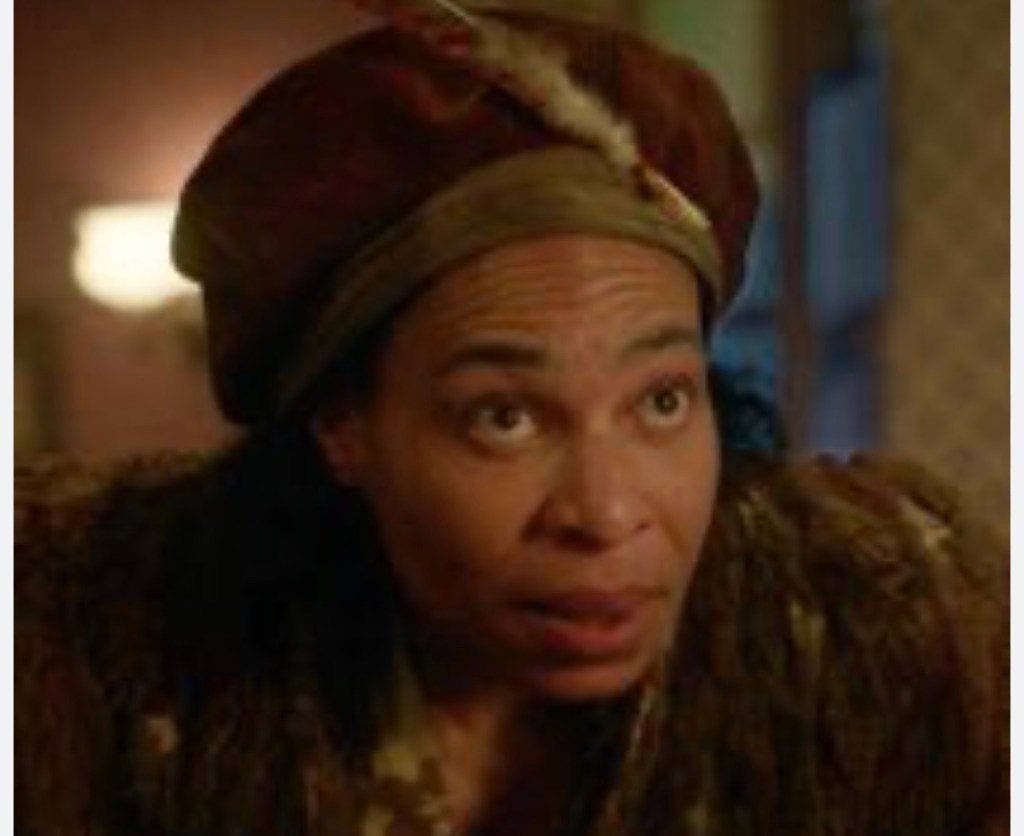
Stay clean, stay free…unless you broke out just to go back.
Zelmare Roulette, one in the land of 1,000 characters that is “Fargo” Season 4
The above was a throwaway line in a superfluous subplot, and it flew past my ear three years ago when that episode aired. For whatever reason, the other morning, it landed. Like, hey, that quote pretty much sums up my whole philosophy on life!
The speaker has just escaped from prison along with her younger partner, who immediately starts looking for the nearest bottle of hooch to enhance the high. “Zelmare,” who’s clearly been around the (cell) block a few times, sees those cravings for what they are: a trap. You get sloppy and start taking your hard-won freedom for granted, and you’re gonna be sitting in the hoosegow with a head fulla lice before long!
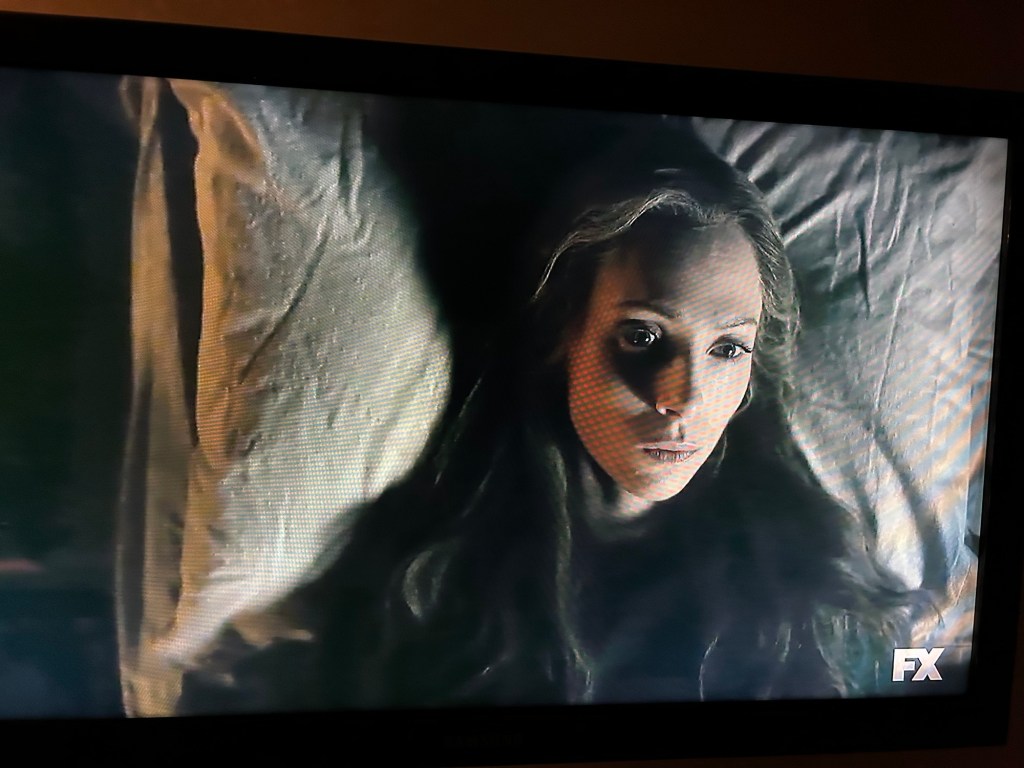
That sentiment applies to ex-cons, recovering addicts, cycle breakers, or anyone who “climbed through six kinds of hell,” as Dorothy Lyon, this season’s “Minnesota nice” superheroine played by Juno Temple, is trying to do — for the second time. She’s forced to confront a dark past she thought she buried, reminding survivors just how grueling and nonlinear the process of recovery can be. Dorothy is a victim of sexual abuse and domestic violence, some of the “Big T” traumas we talk about in the counseling field, and though addiction is a different animal, I can’t help but watch her blissful new life crumble in heartbreaking fashion and think what folks in AA say about “the disease doing push-ups in the parking lot” when we’re sitting in a meeting feeling safely, soundly sober.
Defeating demons, overcoming issues, healing wounds, making peace with mistakes, blazing a new trail of lasting change…no one who has the strength and courage to make it through that wringer ever wants to find themselves “in a box marked returned to sender,” as Dorothy’s snooty/snarky mother-in-law Lorraine (Jennifer Jason Leigh) puts it.
When we get to our proverbial promised land, the price of our freedom is responsibility. That seems to be a major theme in this season’s storyline — and maybe the whole series.
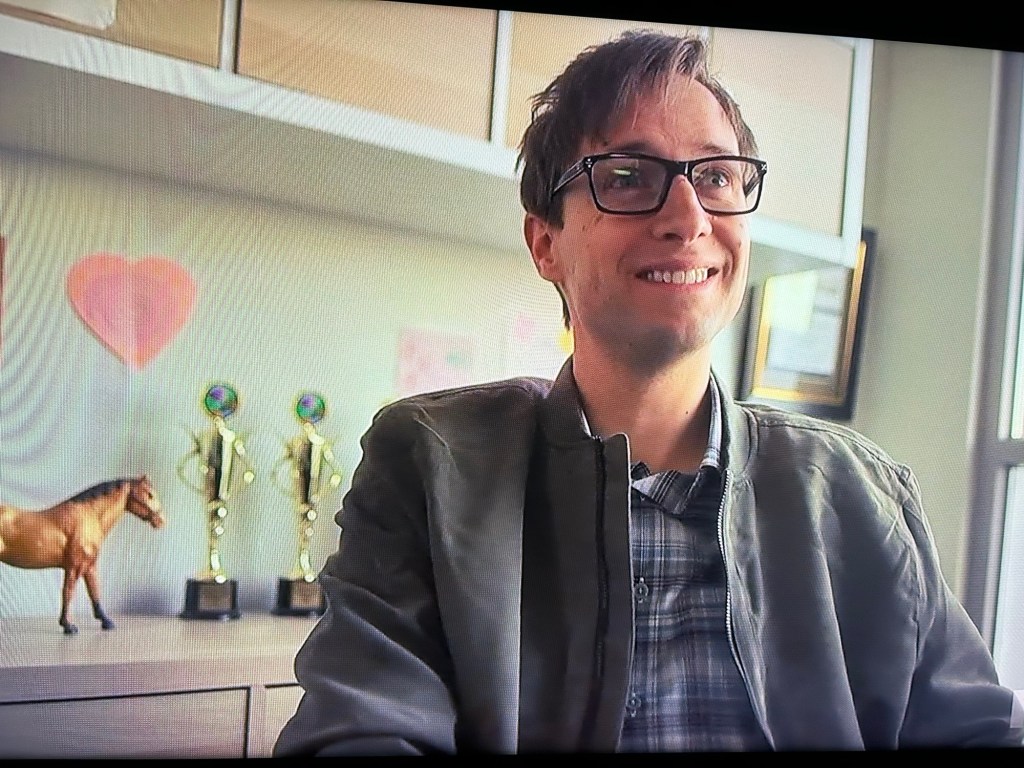
As each one has received a gift, use it to serve one another. That’s in the Bible, right?
Wayne Lyon, the “aw, Norm” husband character in Season 5
In AA, they say that “to keep it, you’ve got to give it away,” meaning, recovery from addiction depends on an addict’s willingness to help others recover. The 12th step is service. And it’s no accident that I hear echos of that everywhere, from psych class to pop culture to church on Christmas Eve (I went this year for the first time in a long while…and got served a side of COVID with my communion and carols 😑).
The idea that we are called to be responsible not just for ourselves, but toward others, or that service is the path to salvation from all the “sins” we seek to amend, is at the heart of any “good living” blueprint, be it secular or spiritual. It cuts to the core of what human existence is all about, offering ample inspiration and malleable material for making art. It’s the “golden rule” we were taught growing up, and it’s what we learn, as adults, is the antidote to our emptiness, isolation, and existential dread.
It’s the essence of recovery.
Viktor Frankl wrote about responsibility, and what he called “spiritual freedom,” in “Man’s Search for Meaning.” Even though human life has a time limit, and suffering is an inevitable byproduct of living in this cruel world, Frankl believed we can make it all mean something with the work we do, the love we show each other, and the attitude we take toward our circumstances. When we choose to control what we can, and show up in the world with willingness and openness for whoever and whatever enters our path, we can find purpose in a seemingly futile existence.
That book was borne out of the worst suffering imaginable: Frankl’s imprisonment in a Nazi death camp. His philosophy forever resonates, for reasons articulated below by perhaps the worst person in the “Fargo” universe — at least until Jon Hamm showed up in a cowboy hat and nipple rings (yeah, you read that right…)
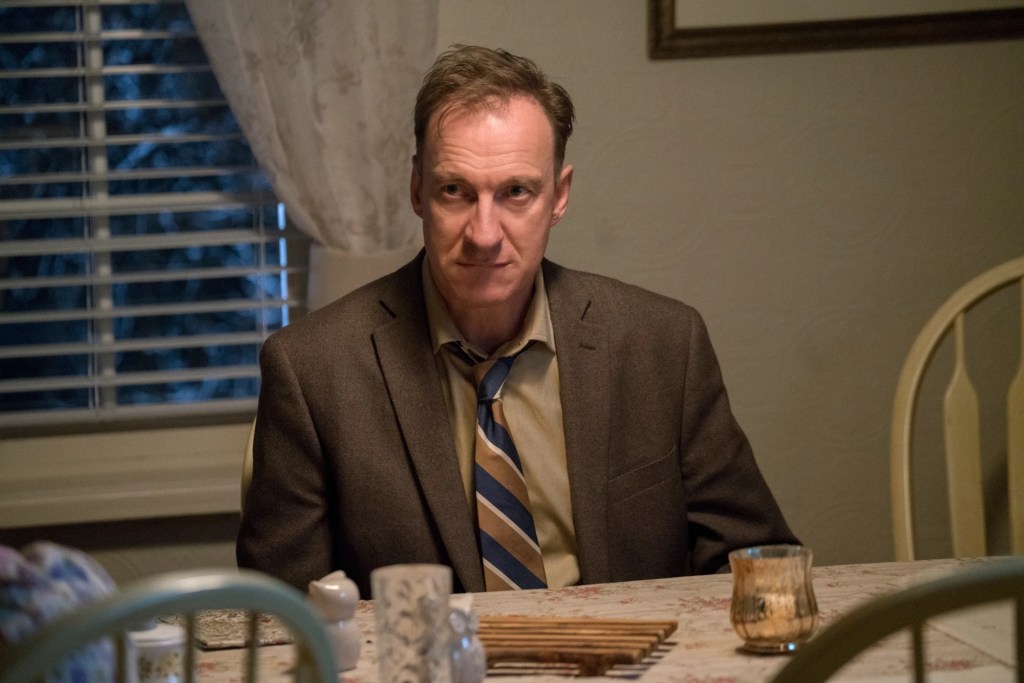
The problem is not that there is evil in the world. The problem is that there is good. Because otherwise, who would care?
V.M. Varga, the grotesque fascist-leaning supervillain from Season 3
Fighting evil is, essentially, creating meaning. It’s exercising spiritual freedom in the face of insurmountable odds. And the Marge Gunderson-inspired civil servants at the center of each “Fargo” chapter are all committed to — or, even a bit obsessed with — that noble pursuit. Their down-to-Earth struggle to serve and protect is presented in stark contrast to the aloof, self-centered rich and powerful, or folks who covet/chase wealth and power at all cost. Their quest for truth and justice is often thwarted by broken systems that fail the people they were set up to help.
It’s obvious why Sisyphus, the iconic existential “absurd hero,” shows up multiple times in the series. “The Myth of Sisyphus” is the actual name of a Season 2 episode, which shows Noreen, the morose butcher shop cashier/emancipated teen, reading Camus’ book at the counter and confronting various other characters with its contents. She deadpans, “Knowin’ we’re gonna die makes life absurd,” to her boss, and later, a mother just diagnosed with cancer; both have families (unlike Noreen 🤔) and thus aren’t having it.
Sisyphus’ plight plays a major role in Varga’s season, looming in the background as resident good cop Gloria (Carrie Coon) works a convoluted case of sibling rivalry gone awry. A parallel is drawn between Gloria’s work and a robot version of a Minsky “useless machine,” who wanders tirelessly around a suffering planet for eons, insisting, “I can help!” but he never really seems to. And at the end, he simply shuts himself off.
That don’t seem like too good a deal for him — but, you see, he is us. At least those of us who give a shit about the state of our surroundings.
I think the comment is that even when it looks like there’s no point to anything — which is basically all the time — we actually do serve the world by continuing to show up and roll that stone. Fight the good fight. Our effort, straining to scale that hill every day, gives off sparks of hope where otherwise there would be only despair.
“Fargo” plays this point on repeat. In Season 1, Colin Hanks’ Gus Grimly character isn’t the main police-force protagonist, but he too takes up the Margie mantle. In Episode 5, Gus’ neighbor, a rabbi, shares a parable about a rich man who literally “gave it all” trying to alleviate human suffering. You can probably guess how that story ends (see: Sisyphus), but here’s the clip anyway:
Gus: So, he killed himself for nothing?
Rabbi: Did he?
Gus: So, you’re saying…what are you saying?
Rabbi: Only a fool thinks he can solve the world’s problems.
Gus: Yeah, but you gotta try, don’t you?
“Fargo” Season 1, Episode 5
As a recovering addict, living a life of meaning and purpose demands that I manage the extreme all-or-nothing tendencies that drove me toward destructive escapism. The “stay clean, stay free” approach really does bear fruit; I’m slowly, gradually seeing results the more time and effort I devote to the work. But I still battle my demons from time to time, my mind re-playing dysfunctional old messages — that any stillness or discomfort is a prison from which I need to flee immediately, that “this is not enough, you are not enough, nothing is ever enough, it’s all a big nothing, what are you even doing here?” Staying present in that moment, any moment, feels impossibly painful, so I go HAM on whatever distraction happens to grab my attention or ignite my passion.
Sometimes, the obsession feeds the sickness. Dwelling on how tight my pants feel, whether I ate too much or should be working out more, what I should or shouldn’t have said in a conversation two weeks — or two years — ago, the tone I’m reading into someone’s routine email, the embarrassing shit I did while drunk in a past life, the yearning for some quick hit of external validation to assure me I’m good/right/OK…this kind of emotional wheel-spinning keeps me stuck in a self-sabotaging cycle that once “drove me to drink” and now can turn me into a “dry drunk,” if left unchecked.
And sometimes, the fixation is harmless, like a TV show — and in fairness, shows like “Fargo” were built to be pored over with over-the-top attention to detail, because honestly, how else are you gonna follow the link between an ancient “sin eater” and the big galoot in the bathtub who wants pancakes?
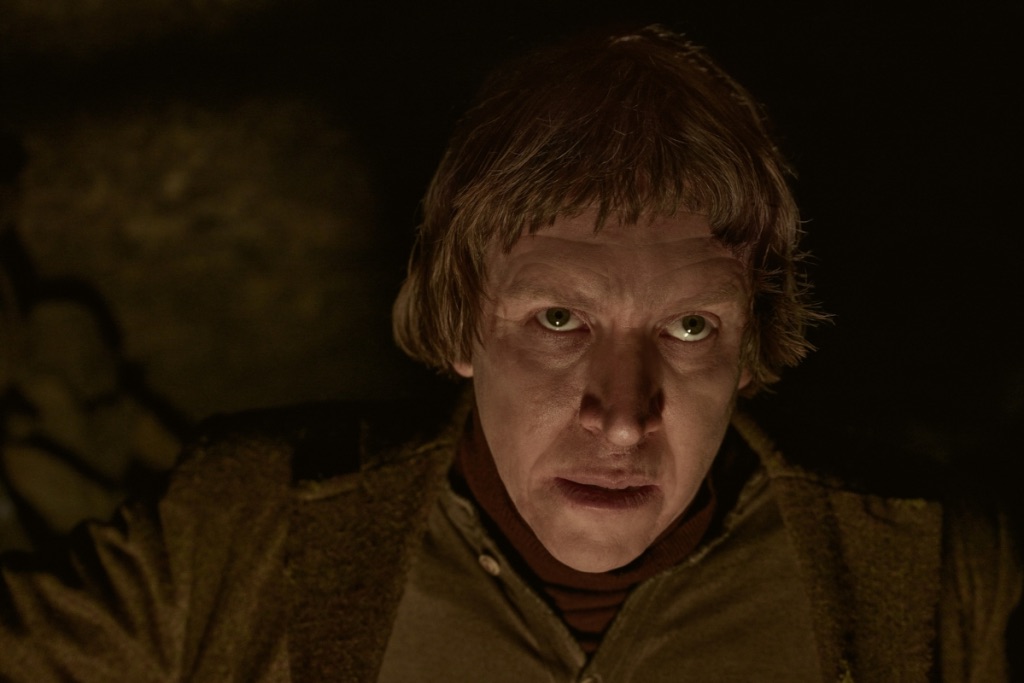
Now, everywhere you look, you see kings. Everything they want, they call their own, and if they cannot have it, they say that they are not free. They even pretend that freedom should be free, that it has no cost. But the cost is always… death.
Ole Munch, Season 5’s “ultimate badass,” a cross between Gaer Grimsrud and Anton Chigurh. If I need to tell you who those guys are, you have to be hopelessly lost trying to follow this post…
So here we are back at that same old existential dilemma, reckoning with what it means to be human, how to measure the value, and quality, of human life, and what to do with a life you know will bring unrelenting pain before it boxes you up and sends you back, “dust to dust.” The creators of “Fargo” seem to understand the massive balls it takes to stand up and fight in the face of all that, and not, as Noreen bluntly puts it, “just kill yourself and get it over with.”
That’s clear in the love the writers have for their endearing everyman characters, like our Dorothy, fierce survivors who never quit (or complain) on the seemingly never-ending climb out of hell, and accept responsibility for the mark they make on the world instead of taking the easy way out. It’s clear in the deep reverence they show all the “Margies,” from Gus to Gloria, Lou to Molly Solverson, and now Indira Olmstead, who share the transcendent ability to appreciate the beauty of a day in which everything is FUBAR.
Folks in recovery get, better than anyone, that life is suffering and freedom is not free — we are not entitled to peace and happiness; we earn it by continually choosing to stay clean. And “clean” does not mean just laying off the hooch or staying out of the hoosegow; it means owning your shit and doing what it takes to work through it, so you can face reality as your authentic self, handling whatever challenges the universe throws your way, and being useful to whomever it puts in your path, when it would be so much easier to run away, check out, give up.
Frankl calls that “being worthy of our suffering.” I call it “signing up for life,” walking out into the darkness and refusing to let anything blow out our light.
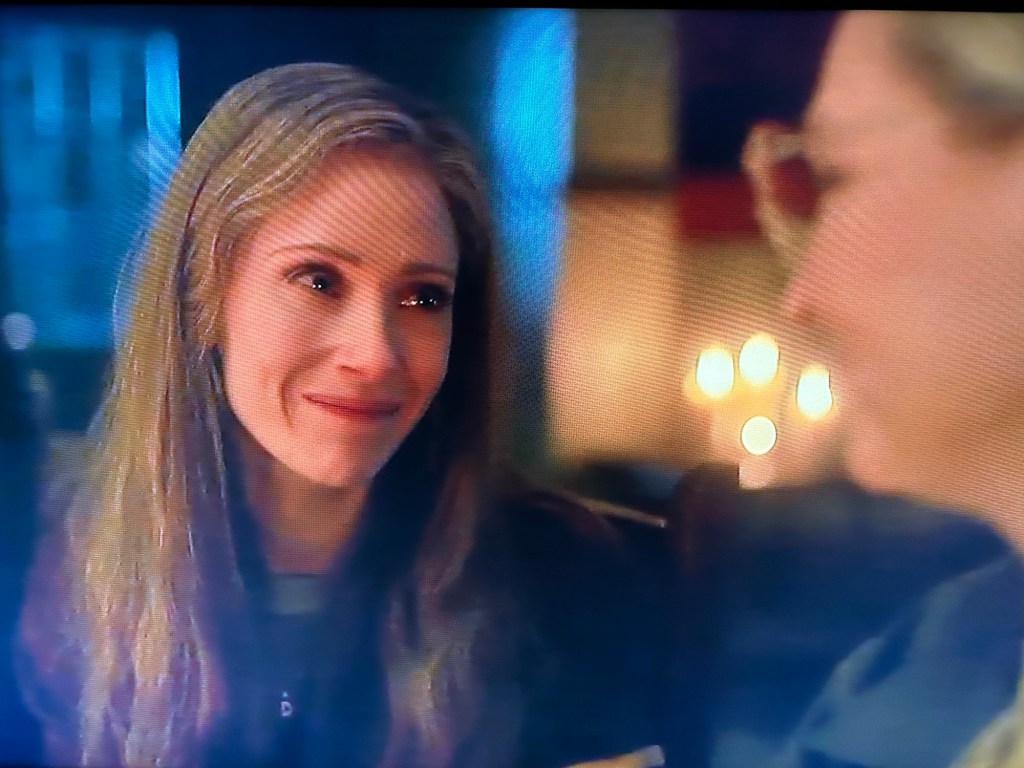
I know who I am and what’s important. …I am the me I want to be. I’m here to do something.
Dorothy Lyon, a woman brave enough to “go somewhere” very dangerous so that she could finally “come home.”
I think I’m so obsessed with “Fargo” because at root, it’s a show about holding on to hope, and if there is any “healthy” obsession to indulge in this life, I believe it must be that.


I resonated with you on this one. In a meta/media way. I first resonated with your writing regarding a cheezy reality show from ten years ago and now this.
Yes, I’m in on the Fargo MA-audience.
Yes I kind of blew off the Chris Rock season.
Lastly, I had no idea it was Coons in that season. I just finally got through “The Leftovers” and she was remarkable.
Re: LO
Season one was brutal and almost unwatchable. The series finale was the best, sweetest, most satisfying show ever.
LikeLiked by 1 person
Wow! So much to unpack here, Jen. First of all, thank you. This post went perfectly with my first cup this morning. I haven’t started watching Fargo yet, but based on the caliber of people who’ve asked me if I follow it, and the acting quality of the cast, I know that it must be formidable. Jumping to Victor Frankl, and his book, “Man’s Search For Meaning”, it was gifted to me by one of those old fellowship club house sages in my early days. I believe he was trying to impress upon me, and empower me with, the power of “choice”. It’s the blessing and the tool/weapon that I didn’t possess as a person obsessed. Choosing how I will act, or respond, or not act, moment by moment, or “between two heartbeats” as he used to say. No longer driven by compulsion or obsession, I was in a position to consciously choose how I would act, or react, regardless of the conditions, such as the dire conditions that Dr. Frankly illustrates in his book. His take on Sisyphus? “Every time I reach the mountain top, do you know what I see? Another mountain.”
You got me started on a great note this morning, Jen. Thank you!
Peace.
LikeLike